
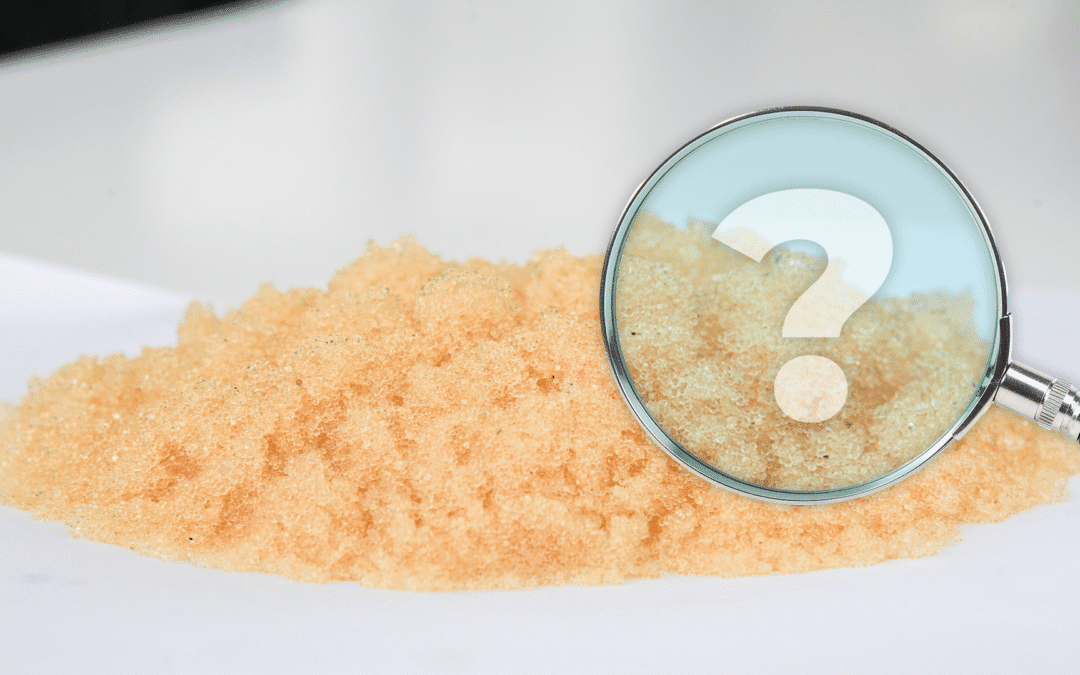
If your water softener used to work great but now feels “off,” it’s normal to ask, “How long does water softener resin last?” and whether the resin inside your system may be wearing out—especially if someone has told you, “Your water softening resin might be bad.”
Before you assume you need a whole new system, it helps to know one key thing: resin lifespan is not the same as water softener lifespan. A softener can still “run” while delivering harder water if the resin bed is worn or damaged.
In Mid-Missouri (Jefferson City, Columbia, and Lake of the Ozarks), water chemistry such as chlorine, iron, and hardness can cause water softener resin to wear faster or slower.
In this guide, you’ll learn:
- What a realistic water softener resin lifespan looks like
- What resin actually does inside your system
- What causes resin to wear out early
- How to tell if resin in water softener is the problem (or something else)
- What to do next
Quick Answer — How Long Does Water Softener Resin Last?
Water softener resin typically lasts 10–15 years in most homes. Resin may wear out sooner—sometimes 5–8 years—when water contains high chlorine, iron/manganese, or extreme hardness. In favorable conditions, resin can last 15–20 years with good maintenance.
Performance decline is usually gradual, and resin wear does not automatically mean the entire softener needs to be replaced.
How Long Does Resin Last in Water Softener?
Typical residential lifespan range (what to expect)
Most homeowners fall into one of these ranges:
- 10–15 years in typical conditions
- 5–8 years in harsh conditions (often chlorine + very hard water, or iron)
- 15–20 years in best-case conditions with consistent softener upkeep
Resin lifespan vs. whole softener lifespan
Think of your softener as a few major parts working together:
- Resin bed: does the softening work (often wears first)
- Tank and valves: may last longer than the resin, depending on conditions
That’s why a “working” softener can still deliver hard water because the resin can lose capacity before anything mechanical breaks.
Resin lifespan by water condition (what to expect)
| Water condition | Expected resin lifespan | Why lifespan shortens | What homeowners notice |
| Typical municipal water | 10–15 years | normal wear | gradual hardness return |
| High-chlorine municipal water | 5–8 years | oxidation damage | faster performance drop |
| Well water with iron/manganese | 8–12 years | resin fouling | inconsistent softening |
| Very hard water / high usage | 8–12 years | frequent regeneration | higher salt use |
What Is Water Softener Resin? (And What It Does)
What water softener resin beads are
Resin beads are the “working media” inside a softener. Their job is to swap hardness minerals (calcium and magnesium) out of the water through ion exchange.
What the water softener resin bed is—and why it matters
All the resin beads together form the resin bed. When the resin bed is healthy, your water softener can remove hardness efficiently. When it’s worn, you may notice hard water symptoms returning even if the system still appears to run normally.
How Resin Wears Out Over Time
Resin usually doesn’t “go bad overnight.” Instead, the resin beads in a water softener wear down gradually through one (or more) of these paths:
The 3 most common ways resin fails
- Capacity exhaustion (gradual efficiency loss)
Over time, resin can lose its ability to exchange hardness minerals as effectively. - Chlorine oxidation (beads weaken and break down)
Chlorine in municipal water can slowly damage resin, making it weaker and less effective. - Iron/manganese fouling (beads get coated)
In well water, iron or manganese can coat resin beads so they can’t exchange minerals as well.
Gradual vs. sudden failure
- Most resin decline is gradual.
- If symptoms feel sudden, it may involve something else (like a regeneration problem), or physical bead breakdown.
What Shortens Resin Life the Most
Chlorine exposure (municipal water)
Chlorine is often a major driver of early resin breakdown in city water.
Iron or manganese (well water)
Iron/manganese can foul resin and also contribute to inconsistent softening performance.
Very hard water + frequent regeneration
More hardness (and higher usage) often means more regeneration cycles, which increases wear over time.
Maintenance and settings issues
Even with decent water chemistry, incorrect settings or neglected upkeep can shorten resin life.
If you’re not sure how your water quality affects your resin, a water test can help clarify what’s actually happening before you replace anything.
Signs Your Water Softener Resin Is Going Bad
Use this as a “may indicate” checklist, not a diagnosis.
Resin-wear symptom checklist
☐ Hard water symptoms return even after regeneration
☐ Soap doesn’t lather like it used to
☐ Scale buildup returns on fixtures
☐ You’re using more salt with worse results
☐ Gritty or sand-like particles show up (possible bead breakdown)
Signs that are often not resin
Some symptoms can also come from non-resin issues (like brine draw problems, injector clogs, or settings). That’s why it’s smart to confirm the cause before spending money on resin or replacement.
How to Tell If It’s Resin or Something Else
Here’s a simple way to think about it:
When resin may be the issue
If the system seems to regenerate but hardness keeps coming back, resin wear is worth evaluating.
When it may be something else
If the system isn’t regenerating correctly (or isn’t drawing brine), the issue may be non-resin related.
The best next step before replacing anything
Confirm the water conditions that drive resin wear, such as hardness level, iron, and chlorine exposure, through testing or evaluation. This keeps you from guessing.
Is Replacing Resin Worth It?
When resin replacement may be worth evaluating
Resin replacement may be reasonable when:
- Your resin water softener is likely older (around 10+ years)
- Hard water symptoms are persistent
- Water chemistry supports resin wear (chlorine, iron, very hard water)
When resin replacement is often a poor investment
It may not make sense when:
- The overall system is very old and multiple components are failing
- Symptoms point strongly to non-resin causes
- You haven’t validated the cause yet
“Should I evaluate resin replacement?” decision flow
- Are hard-water symptoms back?
- Does regeneration seem to occur normally?
- About how old is the resin/system?
- Do you have drivers like chlorine, iron, or extreme water hardness?
- Next step: confirm with a water test / professional evaluation
How to Help Resin Last Longer
These are high-level habits that support longer resin life (not DIY repair steps):
- Keep up with normal softener upkeep and service intervals
- If chlorine is a known issue, consider pre-filtration
- If iron is present, ask a pro whether cleaning/support steps apply in your case
- Use good-quality water softener salt and avoid letting maintenance slide for long periods
If you want help keeping your system tuned correctly, periodic professional maintenance can catch small issues early and help extend the life of your resin and equipment.
What maintenance can’t fix
If resin beads for water softener are physically degraded or capacity is exhausted, maintenance may not restore performance. At that point, evaluation helps you decide what’s worth doing next.
FAQ — Water Softener Resin Lifespan Questions
How often should you change your water softener resin?
Often around 10–15 years, but it depends on chlorine, iron, hardness, and maintenance.
How long is softener resin good for?
Typically 10–15 years, with shorter lifespans in harsher water and longer lifespans in favorable conditions.
How can you tell if water softener resin is bad?
Resin may be a factor if hardness returns even after regeneration, salt use rises while results decline, or symptoms persist over time. Testing helps confirm the cause.
What happens when resin goes bad in a water softener?
When resin goes bad, it gradually loses its ability to remove hardness minerals. Hard water symptoms may return, salt use may increase, or softening may become inconsistent, even if the system still runs.
Is it worth replacing resin in a water softener?
Sometimes, especially if the system itself is in good shape and the issue is validated. It’s usually smartest to confirm water conditions before replacing anything.
Is water softener resin dangerous or toxic?
In normal use, resin is designed to be used inside water treatment systems. If you have concerns about water quality changes, confirm with testing rather than assumptions.
Next Step — Confirm Before You Replace
The goal isn’t to “do something” fast. It’s to confirm whether resin wear is truly the issue before you spend money unnecessarily.
If you’re in Mid-Missouri (Jefferson City, Columbia, Lake of the Ozarks, and nearby areas), a water test can confirm whether resin wear is actually the cause and help you decide whether maintenance, resin replacement, or no action makes the most sense. Schedule a free water test to get clear answers before replacing anything.