
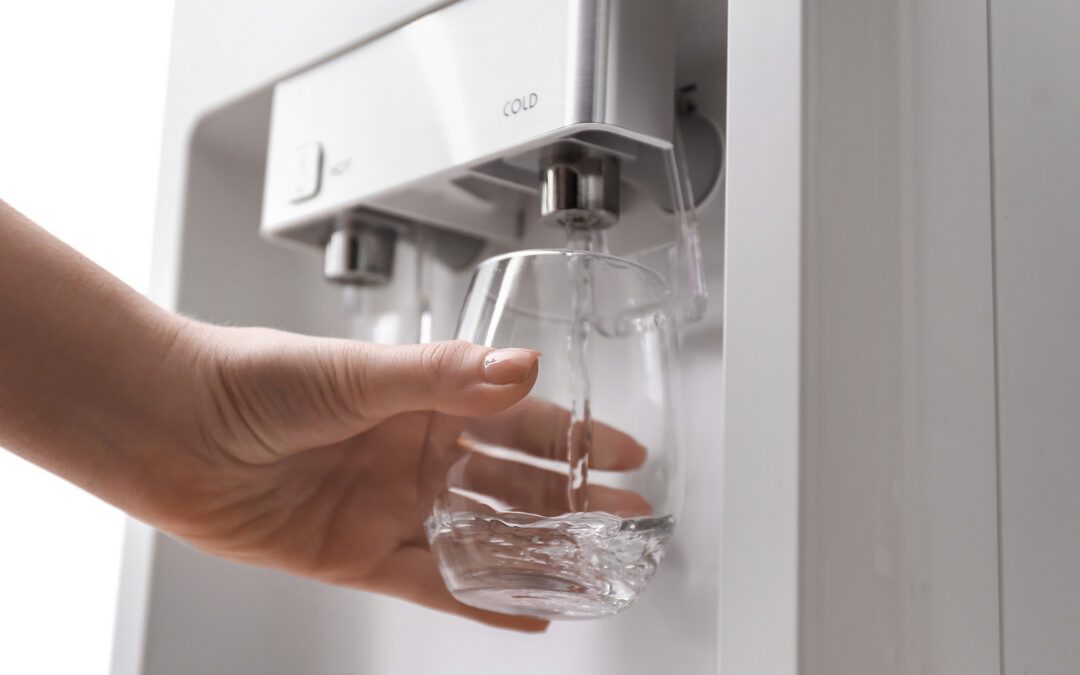
A bottleless water cooler skips the 5-gallon jugs entirely. The unit connects directly to your water line and filters the water before dispensing it, so you get cold, hot, or room-temperature drinking water without needing bottle storage or regular jug changes. For busy homes, offices, clinics, and waiting rooms, it can be a simple way to keep filtered drinking water available throughout the day from one clean, easy-to-use unit.
The filtration side of these units matters more than most people expect when they first start looking at them. Not every bottleless cooler filters the same way, and the difference between a basic carbon filter and a reverse osmosis system is significant, especially if you’ve got real concerns about your water quality.
Let’s break it down.
How Does a Bottleless Water Cooler Work?
A bottleless water cooler connects to a water line in your home or business, usually in a kitchen, breakroom, office, waiting room, or lobby. Once it’s hooked up, water flows into the unit, passes through filtration, and comes out ready to drink.
The difference from a standard bottled cooler is straightforward: instead of replacing 5-gallon jugs when they run out, the water supply is continuous. You’re not storing extra bottles, scheduling deliveries, or running out at the wrong moment.
The exact setup depends on the cooler, the filtration level, and your water quality. Think of a bottleless cooler as a small drinking water system, not just a dispenser.
What Does a Bottleless Water Cooler Filter Out?
Connecting to a water line doesn’t mean you’re drinking straight tap water from a fancy machine. Before it comes out of the dispenser, the water passes through a filtration system. What that system actually removes depends on the type of filtration the unit uses, and that’s where these units differ from each other more than most people realize.
Carbon Filtration
Most standard bottleless coolers use carbon filtration. Carbon filters reduce chlorine taste and odor, sediment, and common contaminants that affect how your water smells and tastes. If your main complaint is that your tap water tastes flat, metallic, or like chlorine, a carbon-filtered bottleless cooler can make a real difference.
Multi-Stage Filtration
Some systems add additional filter stages for better results. This might include a sediment pre-filter, a carbon block stage, and a polishing filter. Multi-stage setups produce cleaner-tasting water and protect the cooler itself from sediment buildup, which extends the life of the unit.
Reverse Osmosis
For the highest level of purification from a point-of-use system, some bottleless units include a reverse osmosis stage. RO filtration pushes water through a semi-permeable membrane that removes a much wider range of dissolved substances, including nitrates, heavy metals, and total dissolved solids. If you’ve had a water test that flagged specific concerns, or if you want the cleanest drinking water a point-of-use system can deliver, an RO-equipped bottleless cooler belongs in the conversation.
Not sure what your water actually needs? A free water test from Mid-Mo Water Solutions takes the guesswork out of choosing the right filtration level before you commit to any system.
Bottleless Water Cooler vs. Bottled Water Cooler
Both give you convenient drinking water. The better fit depends on your space, how much water you go through, and whether you’d rather have bottled water delivered or a plumbed-in filtered system.
| Feature | Bottleless Water Cooler | Bottled Water Cooler |
| Water source | Existing water line | Delivered 5-gallon jugs |
| Bottle storage | None needed | Space needed for full and empty bottles |
| Setup | Needs a water line connection | Simple, no plumbing required |
| Best for | Steady daily use with nearby plumbing | Delivered water preference, no plumbing |
| Maintenance | Filter changes and service | Bottle delivery and cooler care |
| Main benefit | Unlimited filtered water | Convenient delivered bottled water |
A bottled cooler makes sense if you prefer delivered water or don’t have a nearby water line. A bottleless cooler fits better for steady daily use where you want filtered water without the bottle logistics.
What to Think Through Before You Install One
Before settling on a bottleless cooler, a few practical things to sort out first.
Where will it go? It needs to be somewhere people can easily reach it and where a water line connection is available. Those two things don’t always overlap perfectly in every space.
How many people will use it? A household of four is a different situation from a busy clinic or office. Higher usage means filtration capacity and service intervals matter more.
Do you need hot water? If the cooler will be used for tea, instant coffee, oatmeal, or soup, get a unit with hot water output. If it’s mostly for filling water bottles, cold and room-temperature water may be all you need.
Who handles service and filter changes? Filters need to be maintained on schedule to keep the water tasting right and the system running properly. Mid-Mo Water Solutions handles service and filter maintenance for their customers, so that’s one less thing to manage on your own. Factor that in when you’re comparing options.
Not Sure If a Bottleless Water Cooler Is Right for Your Space?
Mid-Mo Water Solutions works with homeowners and businesses throughout Jefferson City, Columbia, and surrounding Mid-Missouri communities to find the right drinking water setup for their actual situation.
Whether that’s a bottleless cooler, bottled water delivery, a reverse osmosis system, or something else entirely, the right answer starts with understanding what you actually need.
Contact Mid-Mo Water Solutions to talk through your options.