
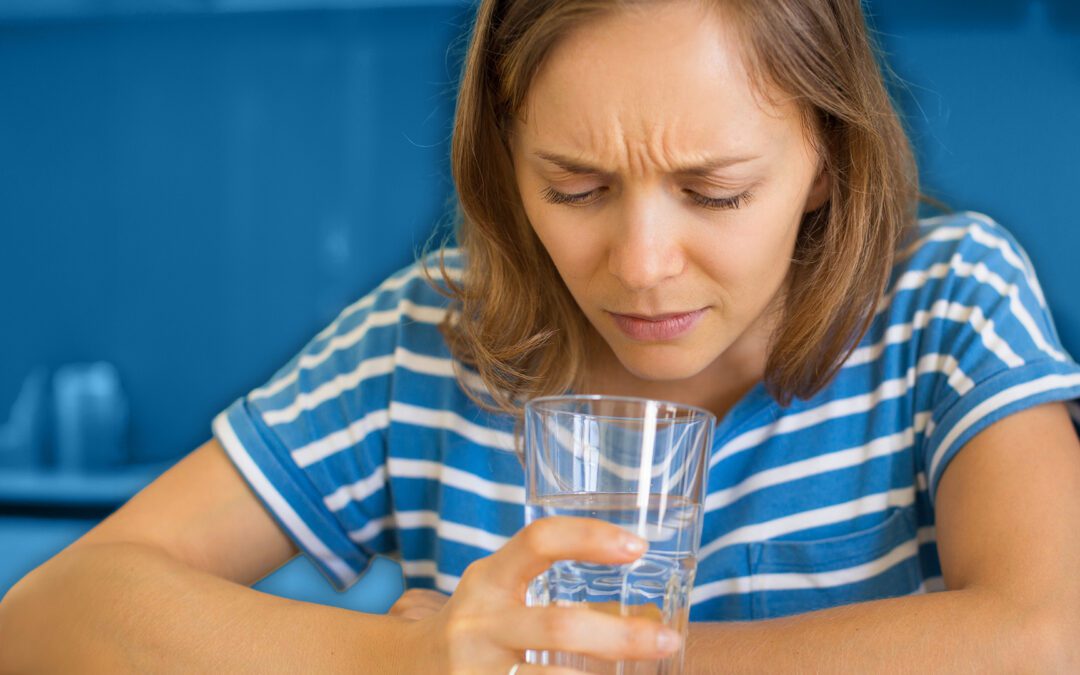
Ever take a sip of water and get a taste like pennies, an old toolbox, or something straight out of a pipe? We hear about that a lot around here.
That metallic taste is hard to shake once you notice it, and it’s got you wondering what’s actually going on.
Let’s walk through the most common reasons why your water tastes like metal, and what actually causes it.
Quick Answer: Why Does Water Taste Like Metal?
Water can taste like metal for a handful of reasons: minerals in the water, old or corroded plumbing, acidic water, copper or lead concerns, water heater issues, or a temporary change in the city supply.
If you’re on well water, iron and manganese are usually the first suspects. If you’re on city water, it’s more likely tied to plumbing, fixtures, corrosion, or a temporary change in the system.
Is Metallic-Tasting Water Safe to Drink?
Most of the time, yes, but it depends on what’s actually causing it.
If the taste is coming from minerals like iron or manganese, it’s more of a nuisance and staining issue than a health concern. If it’s tied to plumbing corrosion, low pH, copper, or lead, that’s worth taking seriously, especially in older homes.
If the taste is mild and only shows up occasionally, it’s probably nothing urgent. If it’s new, strong, persistent, or showing up throughout the whole home, get the water tested, especially if you’re on well water, have older plumbing, or you’re noticing staining, cloudy water, or odor along with the taste.
A water test gives you facts, and facts are a lot more useful than standing over the sink playing water sommelier.
Common Reasons Your Water Tastes Like Metal
A metallic taste can come from a handful of different places, and the clues look a little different depending on which one it is: the color of any staining, whether it’s only the hot water, or whether the taste fades after you run the tap for a bit. Whatever’s behind it, a water test is really the fastest way to know for sure. Here’s what each cause usually looks like.
Iron in the Water
Iron’s one of the most common reasons water tastes metallic around here, especially if you’re on a well.
It can give your water a sharp, rusty taste, and it doesn’t stop there, it can leave reddish-orange stains in your sinks, toilets, tub, and laundry too. If you’ve ever scrubbed at orange stains on a fixture and wondered why they keep coming back, iron’s probably part of the story.
Iron’s usually more of a nuisance than an emergency, but it can still make your water unpleasant to drink and a pain to live with, and it can mess with appliances, fixtures, and anything white that goes through the wash.
Manganese in the Water
Manganese is another mineral that can mess with taste and staining.
Iron tends to leave reddish or orange stains. Manganese usually leaves darker stains or black marks around fixtures, drains, or appliances instead, and it can give the water an odd taste, some people call it metallic, bitter, or earthy.
Like iron, manganese shows up more in groundwater and well water, which makes it especially relevant if you’re out in the rural parts of Mid-Missouri. Since the two often show up together, it can be hard to tell which one’s actually behind the taste just by looking.
Old or Corroded Plumbing
Sometimes it’s not the water source causing the problem. It’s the plumbing the water passes through on its way to your glass.
Older pipes, fittings, fixtures, or corrosion inside your plumbing can all affect taste. This is worth considering if the metallic taste is strongest first thing in the morning, or after the water’s been sitting in the pipes for a few hours.
Here’s a simple way to check: run the tap for a bit and see if the taste improves. If that first glass tastes metallic but it fades after flushing the line, the plumbing side deserves a closer look.
Low pH or Acidic Water
Low pH means your water’s more acidic, and acidic water can be corrosive, which means it can slowly wear on pipes, fittings, or fixtures over time.
When water’s corrosive, it can pick up metals from the plumbing system on its way to your tap. That can cause a metallic taste, and sometimes blue-green stains around sinks or fixtures, especially if copper’s involved.
You can’t confirm low pH by taste alone, only a test will tell you for sure. If it turns out to be part of the issue, the fix might look different from a basic taste-and-odor filter.
Copper or Lead Concerns
A metallic taste doesn’t necessarily mean there’s lead in your water. That’s important to know up front, though if the taste is sudden, strong, persistent, or you’re in an older home, copper and lead are worth ruling out with a water test.
Lead and copper problems usually trace back to plumbing, older pipes, solder, fixtures, or corrosion, so the water can leave the source clean and pick up metals on the way through your pipes. You can’t confirm either one by taste alone, so don’t guess here, a clear answer is worth more than a guess when it comes to something like lead.
Water Heater or Hot Water Issues
If it’s just your hot water that tastes like metal, the water heater might be the culprit.
Sediment, corrosion, or an aging water heater can affect taste, and you’ll notice it most when hot water’s going into tea, coffee, cooking, or dishes.
Try this: compare hot and cold water from the same faucet. If the cold water tastes fine but the hot water tastes metallic, the issue’s probably in the water heater or hot water line. If both taste metallic, the cause is likely something bigger, and that tells you exactly where to start looking.
Temporary City Water Changes
City water can taste different from time to time, and it’s not always something to worry about.
Maintenance, line flushing, nearby water main work, source changes, or treatment adjustments can all cause a temporary shift in taste. It doesn’t necessarily mean something’s wrong inside your home.
If the taste starts suddenly, ask yourself a few things: are your neighbors noticing it too? Did the city recently flush the lines? Any nearby water main work? Did the taste go away after you ran the tap for a bit?
If the taste sticks around, gets stronger, or shows up with staining or odor, don’t just wait it out. A temporary change shouldn’t turn into a long-term mystery.
How to Fix Water That Tastes Like Metal
If iron or manganese is the issue, a whole-house water treatment system can cut down on minerals, staining, and metallic taste. If your main concern is drinking water at the kitchen sink, a reverse osmosis system might be a better fit, it’s built to reduce a wide range of dissolved substances and give you cleaner-tasting water for drinking, coffee, cooking, ice, and even the dog’s bowl.
If the problem’s tied to plumbing corrosion, fixtures, or a water heater, filtration alone might not be the whole answer, the plumbing side needs some attention too.
That’s why we test first, find the cause, then figure out the fix, in that order. Skip that first step, and you can end up with a system that helps a little but never actually solves the problem.
Ready to Find Out Why Your Water Tastes Like Metal?
If your water tastes like metal, there’s a reason, the hard part’s figuring out which one.
Mid-Mo Water Solutions works with homeowners throughout Jefferson City, Columbia, and surrounding Mid-Missouri communities to figure out exactly what’s causing that taste and the right way to fix it.
For some homes it’s iron or manganese. For others it’s plumbing, pH, the water heater, or a drinking water issue. Once you know the actual cause, picking the right fix gets a lot easier.
Don’t guess at the cause. Schedule a free water test with Mid-Mo Water Solutions and we’ll help you figure out what’s in your water and what solution makes sense.