
Your dishes are coming out of the washer with spots again, or the shower just doesn’t feel the way it used to. You try to remember the last time you popped open that brine tank and come up blank. Could’ve been last month. Could’ve been closer to Easter.
You don’t need a spreadsheet or a reminder app to stay ahead of this. Water softeners aren’t complicated machines, and checking one takes less time than it took you to read this sentence twice. You just need to know roughly what to expect and what to look for. Here’s how often to add salt to a water softener, and how to check it yourself in about thirty seconds.
The General Rule of Thumb
Most households check their softener about once a month and end up adding salt every one to two months. A family of four on a standard-size softener typically goes through roughly one 40 lb bag a month.
Your actual schedule depends on how many people are in your house, how much water you use, and the size of your softener. Some homes are closer to every six weeks. Others go through salt faster. Skip the calendar math and check the tank itself instead, which we’ll cover next.
Why There’s No One-Size-Fits-All Answer
A single person living alone in a small house isn’t putting the same demand on a softener as a family of five doing laundry every other day. Every shower, load of laundry, and sink full of dishes sends more water through the resin tank, and each regeneration cycle it triggers burns through salt.
Softener size plays a role too. A bigger unit holds more resin and more salt, so it can go longer between refills even in a busier household. If you’re not sure what size yours is, check the model number on the unit or your paperwork from installation, since it changes your salt schedule too.
If you’re on well water, plan on checking a little more often. Well water tends to run harder than city water around here, and a softener working harder to treat it will pull salt faster than one hooked up to municipal supply.
How to Check Your Water Softener’s Salt Level
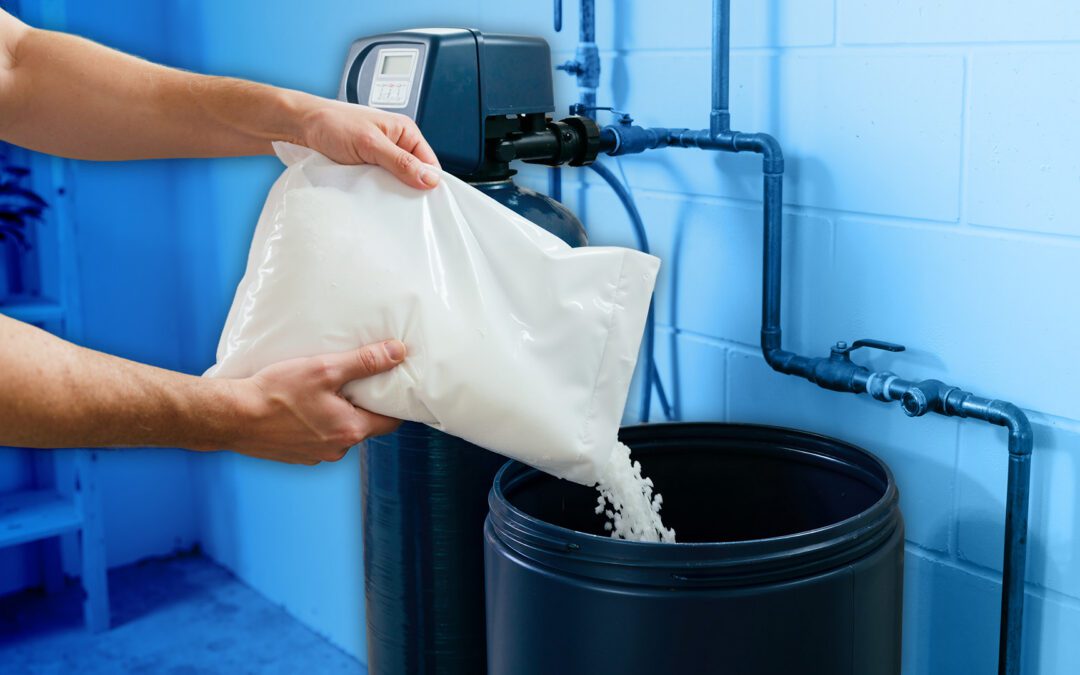
Pop the lid off your brine tank and take a look inside.
You want to keep the tank somewhere between a quarter and a third full. If you can see the bottom of the tank or there’s barely a dusting of salt left, it’s time to add more. If it’s packed to the top, you’re fine as is. No need to top it off just because there’s a little room left.
Salt bridging is another thing to check for. Humidity in the tank can cause the salt to clump and harden into a crust above the water line, and it can look like there’s plenty of salt when the space underneath is actually empty. This happens more often during humid Missouri summers, so give the tank a closer look during those months. If you tap the top layer with a broom handle and it feels hollow or crusty, break it up so the salt underneath can actually dissolve and do its job.
If checking a tank in your basement once a month isn’t something you want to add to your list, that’s a fair call, and it’s exactly the kind of thing our maintenance and service visits are built to handle.
Signs It’s Time to Add Salt
Besides just looking in the tank, your water will usually tell you something’s off before too long. Soap that won’t lather like it used to, faucets and fixtures building up scale again, laundry that feels a little stiff instead of soft, all of those are classic signs your softener’s run out of salt.
Frequently Asked Questions
How long should a 40 lb bag of salt last in a water softener?
For an average family of four on a standard-size softener, a 40 lb bag typically lasts about a month. Smaller households can stretch that to six weeks or more, and larger households or homes on well water will usually go through it faster.
Can you put too much salt in a water softener?
Filling the tank all the way to the top isn’t necessary and can make it harder to spot when it’s actually running low, but a full tank on its own won’t hurt the system. Unnoticed salt bridging under a full-looking top layer causes far more problems than simply having plenty of salt in the tank.
How full should I keep my water softener salt tank?
Somewhere between a quarter and a third full is the sweet spot. That gives the system enough salt to keep regenerating properly.
How does scheduled salt delivery work?
Instead of tracking your own tank and running to the store when you remember, you set up a delivery schedule that matches your household’s actual usage. We bring the salt, fill the tank, and you stop thinking about it altogether.
Never Wonder If It’s Time Again
Checking your softener doesn’t have to be a monthly guessing game. Once you know what to look for, a quick look in the tank takes less time than making coffee. The catch is remembering to do it in the first place, month after month.
If you’d rather take that off your plate entirely, set up scheduled salt delivery with Mid-Mo Water Solutions and we’ll keep your softener topped off on a schedule built around your household, so your water stays consistently soft without you having to think about it.